
I let my daughter tell our family that my husband chose a nursing home, even though he hadn’t. I told myself I was waiting until I had the right facts. Really, I didn’t want to make Beth’s already hard week harder.
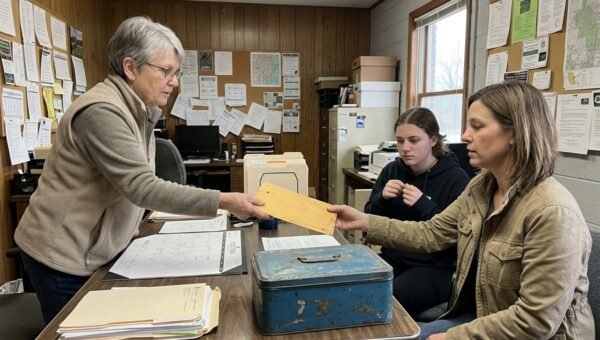
By Tuesday, I had the facts. I had them in a folder on my kitchen table, with a yellow sticky note attached. I showed them to Beth, and the words she said next stayed with me longer than anything written on those pages.
Robert had been in rehab for six weeks. Six weeks since he fell in our kitchen and went to the hospital. I remember the sound of a spoon hitting the floor when the paramedics came in. It was just one spoon, nothing special, but I still picture it lying by the table leg.
The stroke made it hard for Robert to speak and harder for him to get around. He could move his left hand, but even that took patience. He was a man who used to carry his own groceries in two trips because he didn’t want to make a second trip. Now someone had to be nearby when he moved from bed to chair.
Beth drove me to rehab nearly every day. She helped me learn how to get Robert dressed and how to move him without hurting either of us. She brought groceries and called the insurance company because I couldn’t keep track of which number I’d already called.
One night, when I was afraid to be alone in our house, she slept on the sofa.
I’m not going to pretend she did nothing for us. She did nearly everything.
Our son Greg called a few times. Robert’s brother Peter sent a text asking how things were going. Both of them had opinions about what was safest. Neither had spent an afternoon helping Robert into a clean shirt. I didn’t say that at first. I let it sit there, which was its own kind of choice.
After a hospital meeting, Beth told Greg and Peter that Robert had agreed to move into a nursing home. She said he wanted round-the-clock care and didn’t want me struggling at home. I heard about it from Greg, who called to tell me it was probably for the best.
“Dad told Beth that?” I asked.
“That’s what she said,” Greg replied. “She was there.”
I had been there too, but not in that meeting. I didn’t know what had been said in the room.
I knew Robert couldn’t have spoken more than a few rough words at a time. Still, I didn’t correct Greg. I didn’t know enough yet, and I didn’t want to start a family fight on a guess.
The discharge planner’s notes were in a folder Beth left on my kitchen table. The folder had slid under the edge of my placemat. I moved it because I wanted room for my tea, and the yellow sticky note came loose.
Under “patient preference,” someone had typed: “Return home with spouse; evaluate support services.”
The sticky note said: “Daughter concerned about fall risk.”
I read both lines more than once. They didn’t prove Beth had lied on purpose. They did show me that nobody had written down what she claimed Robert chose. I wanted to be fair to her. I also wanted to know why everybody else seemed to have accepted the story without asking him.
The folder stayed on the table until Tuesday, when Beth came by after work. I don’t remember what I made for supper that night. I do remember the mark her coffee mug left on the paper.
I put the folder in front of her.
She read the note, then the sticky. “That was before he fell again in the bathroom,” she said. “The nurse and I caught him. Mom, you couldn’t lift him.”
“I know.”
“He needs help all night. You have arthritis in both hands.”
“I know that, too.”
I looked down at my fingers. My right thumb had been aching for weeks. I’d stopped opening jars unless I had to. I knew what Beth was saying, and I knew she wasn’t wrong about every part of it. That didn’t make the sentence in the folder go away.
Beth set the papers down hard enough that my reading glasses slid off the table. I had to reach for them with both hands.
“Then why are you making this about who gets to be right?”
I didn’t answer right away. I was angry, yes. But underneath that was a fear I didn’t want to name. If Robert went into a nursing home because his own family thought he had asked for it, when he hadn’t, then his choices were going to disappear one at a time. I didn’t want to be the person who let that happen because it was easier.
“I’m making it about what he actually said,” I told her.
Beth rubbed the heel of her hand over her forehead. Her shoulders had dropped. For a second she looked less like the daughter who had kept everything going and more like the girl who used to fall asleep in the car on the way home from a long Sunday at her grandparents’ farm.
“I’m scared he’ll come home and fall when I’m not there,” she said. “I’m scared you’ll try to do too much because you’ve always done everything yourself. I can’t take another call from the hospital.”
There it was. Not some grand plan. Not money or a house or anything like that. She was scared that one bad night would be on her watch, and she was already trying to live with the last one.
She had made the nursing home sound like Robert’s choice because she couldn’t bear to have the family decide it was hers. It wasn’t right. But I could see the fear inside it.
“I’m not asking you to do this alone,” I said.
She gave me a tired look. “That’s what it feels like.”
I wanted to tell her she was being unfair. I wanted to point out that I had asked Greg and Peter to help. I didn’t, because asking once had not made them come. I had also been quiet about how scared I was to have Robert home, because I thought a good wife should be able to manage. I had helped make the room for Beth to carry too much.
“I called a home-care agency,” I said. “They can send somebody mornings and evenings.”
Beth looked at the folder again. “And overnight?”
“Not from them. I’m still working on that.”
I pulled my handwritten list from under a stack of mail. I’d called the township about a temporary ramp and a bathroom rail. I’d written down the agency’s hours and the name of a woman who had watched our neighbor’s husband overnight after his stroke. Mrs. Gable. I had talked to her once over the fence, but I hadn’t called her yet.
“I don’t have this all solved,” I said. “But I started looking at what it would take.”
Beth picked up the list. She read it once, then went back to the line with Mrs. Gable’s name.
“You did all this without telling me?”
“I wanted to know what was possible before I asked you to agree.”
She didn’t say yes. She didn’t say no. She held that page for a while, then set it back down. It wasn’t the answer I wanted, but it was the first time in days that she hadn’t pushed the folder away.
That night I couldn’t sleep much. I kept thinking about Robert in rehab, trying to tell us something while we filled in the words for him. The next morning, I found his old brass house key in the drawer where we kept spare batteries and takeout menus. It still had its faded green cloth tag.
We had installed a keypad years ago, but Robert kept carrying the key in his shirt pocket. He said he liked knowing he could still let himself in. I used to tease him about it. He’d pat his pocket and say, “It’s my key.”
I put it in my purse.
At the rehab center, Robert was awake when Beth and I arrived. I set the key beside his hand. He looked at it, then looked at me. His eyes stayed on the green tag a little longer than I expected.
Beth pulled a chair close to his bed. She had brought a notebook, but she left it closed on her lap.
“Dad, we need to know what you want,” she said. “Mom thinks you want to come home. I thought you wanted the nursing home. The therapist says you can make a choice if we give you time.”
Robert tried to speak. The sound came out rough and unfinished. Beth leaned toward him. I held still. I was afraid even a small movement might make him stop.
I took out the discharge folder and found the advance-care page the therapist had asked us to bring. Robert had marked a box the winter before, back when he was still driving to the hardware store and carrying bags of mulch into the yard. The line read: “I want to stay in my home as long as it can be made safe.”
Beth read it. “You wrote that before you got sick.”
Robert lifted his left hand and touched the green tag on the key.
“That may be what he wanted then,” Beth said quietly. “But we need to know what he wants now.”
She slid the small whiteboard closer and uncapped a marker. The plastic cap clicked against the bed rail. Robert watched her hand. I watched his.
He took the marker and steadied it against the board. His hand shook a little. He looked from Beth to me, then began to write.
The first line came slowly. He had to stop and rest his fingers. Beth didn’t reach for the marker. Neither did I. We let him take the time he needed.
He wrote HOME. Then, after a pause, he added a dash and two more words.
HOME, WITH HELP.
Beth made a small sound and put her hand over her mouth. She lowered her head. Robert set the marker down, then touched the key again.
I looked at the words until they stopped being letters and became a plan. Home, but not pretending. Home, with someone there when I couldn’t lift him. Home, with a rail by the toilet and a ramp at the door. Home, where he could still decide where he sat and what he wanted for breakfast.
Beth started crying. Not the pretty kind people do in movies. She rubbed at her face with the sleeve of her sweater and kept saying, “I’m sorry. I’m sorry.”
I moved my chair closer. Her hand was cold when I took it.
“You’ve been doing too much,” I said. “I should’ve seen that sooner.”
“I didn’t want to be the reason he got hurt.”
“I know.”
“I didn’t want everybody asking why I let him go home.”
That was the part I had understood only halfway. Greg and Peter had asked questions from their own homes, while Beth took the calls and drove me back and forth. She had started speaking for Robert because she thought the rest of us were waiting to blame her. That didn’t make it fair to him. It did make it clear she needed help, not another accusation.
“I’m not letting you carry this by yourself,” I said. “And I’m not letting them make you the bad one.”
Beth looked at me. “Can he really come home?”
“I don’t know every answer yet. But I know we can make a real plan.”
I laid out the list on the bed. The township could install a temporary aluminum ramp. The home-care agency could cover morning transfers and early evenings. Mrs. Gable was willing to talk about overnight care. We’d need bathroom grab bars, a walker path that didn’t run through piles of shoes, and a schedule for who called whom.
Beth tapped the line with Mrs. Gable’s name.
“Four nights?” she asked.
“That’s what I was going to ask her about.”
“I can do one night. Maybe two, if my work schedule lets me.”
“Then we’ll work around what you can actually do.”
She nodded. Robert watched us. When I asked whether he understood that the plan meant paid help and family help, he nodded once. When I asked if he still wanted home with those conditions, he nodded again.
It wasn’t a magic answer. The stroke was still there. The risk was still there. But we were finally talking about the risk instead of using it to put words in his mouth.
Before I left rehab, I spoke with the discharge coordinator. I told her Robert had made his choice, and that we were arranging support. I asked her to halt the nursing home application while we confirmed the home plan. She made a note in the chart and said she’d call if anything changed.
Beth stood beside me while I made the call. She didn’t try to speak for Robert. That mattered.
We went back to my kitchen that evening and called Greg and Peter on speakerphone. I had rehearsed what I wanted to say, but my voice sounded different when I heard theirs. Greg asked whether Robert had changed his mind. Peter asked if the doctor had approved him coming home.
“He wants to come home with help,” I said. “Those are the words he wrote today.”
Beth was sitting beside me at the table. She stared at the corner of the folder, where the sticky note had curled up.
“I told you Dad chose the nursing home,” she said. “He didn’t. I was scared he’d fall again, and I was scared you’d all say it was my fault if he came home. I shouldn’t have said he chose it.”
Nobody spoke for a moment. I could hear the refrigerator motor running. Greg was the first to answer.
“Why didn’t you just tell us you needed help?”
Beth looked down. “I did. You said you’d call.”
That was true. Greg had called later. He had not come over. Peter said he lived too far away to help with daily care, which was also true. It didn’t mean he couldn’t pay for a night of care or come for a weekend. I had to stop smoothing every rough edge for them.
“We’re not asking anybody to lift Robert,” I said. “We have a paid care plan. But if you’re going to question it, then help pay for the help or come see what the days look like. Otherwise, please don’t tell Beth she made this choice.”
Greg said he could cover part of the overnight aide. Peter offered to come the following weekend and help with the grab bars and the small things that still needed doing. I didn’t take that as a promise carved in stone. I wrote down what each one said.
Beth reached over and put her hand on my wrist. It was the first time all week that she touched me without passing me something.
“You don’t have to defend me,” she said after we hung up.
“I’m not defending the lie,” I said. “I’m defending the truth about what you’ve been carrying.”
The township workers came two days later. They bolted the modular ramp into place and checked that the slope was safe. The bathroom rail took longer because the first spot we picked wasn’t where Robert could reach it from the toilet. Beth made them move it. I was proud of her for speaking up, and I told her so.
Mrs. Gable came by that afternoon. She was a compact woman with reading glasses on a cord, and she asked to see the bathroom before she said she could help. I liked that. She checked the space beside the bed and asked where Robert’s walker would sit at night.
“He’ll need someone here four nights a week,” I said. “The agency can cover mornings.”
“Then let’s write down which nights,” she said. “Nobody should be guessing at two in the morning.”
Beth took the pencil and made the schedule. She put her own name on one night, then stopped before she added a second.
“I can do one for now,” she said.
“One is fine,” I told her. “One that you can keep is better than two you resent.”
She gave me a look, not angry, exactly. More like she hadn’t expected me to say that.
I had been so focused on proving Robert’s choice that I nearly forgot how much it would take to make that choice safe. The ramp didn’t make my hands stronger. The rail didn’t make Robert’s legs steady. The night aide didn’t erase the chance of a bad fall. But the plan did mean I wasn’t pretending I could manage every hour alone, and Beth wasn’t being treated like she should.
Discharge was the following week. I remember the day because Beth brought Robert’s coat and held it open while he slid his good arm into the sleeve. He needed help with the other side. He was annoyed at the coat, which was a good sign, in its way.
“Don’t pull it,” he said, the words slow but clear.
Beth stopped. “Okay. Show me.”
He lifted his arm as far as he could. I helped guide the fabric over his shoulder. We didn’t rush him.
At the door, I held it open while Robert moved toward the ramp with his walker. Beth walked beside him, close enough to help but not grabbing him. I stayed on his other side. The discharge aide watched until he reached the car safely.
There was no triumphant little speech. Robert was tired. My hands hurt. Beth had a long list of times and phone numbers in her purse, and she checked the first one twice before we left the facility.
At home, Robert moved through the doorway under his own power. Slowly. One step, then another. He sat down in his worn armchair and let out a breath. Nobody clapped. We were all too busy watching to make sure he was steady.
Beth set his coat over the chair arm. I went to the kitchen and poured coffee, though it was late enough that I’d usually make tea. Beth came in and stood beside me at the counter. Neither of us said much.
Robert reached for the brass key on the green cloth tag. He turned it over once in his hand, then slid it onto the polished wood of the end table beside his chair.
Beth and I drank coffee at the kitchen counter. The key was back where it belonged.