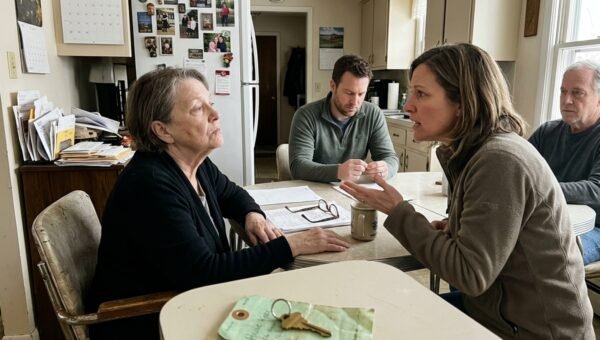

“Just keep the tin away from the coffee, Mom,” Lila said, straightening the corner of our tablecloth at the county seed exchange. I moved it a few inches from the paper cups. The dented lid caught on the cloth, like it always did. It was such a regular little fuss between us that I remember it better than what I said back.
Then Mr. Henderson set a red tomato on the folding table and asked if I could tell him what had gone wrong.
Lila stood beside me, stiff and quiet. Marcy was across from us, holding a second envelope.
She said, “Before you answer, you should see what your daughter sent me last spring.” Lila put her hand over mine as I reached for the tin. I looked at her hand, then at the envelope. I had brought the seed tin, the planting log, and the supplier receipt because I had decided I would tell the truth. I had not planned for the truth to arrive in Lila’s own handwriting.
For nine years, Lila and I had run a small greenhouse outside Dayton. It had her name on the loan papers and her keys in the office, but I worked there most days, and I’d never thought of it as only hers. We sold annuals and vegetable starts, and in spring we took a table at the county exchange. The heirloom tomatoes were the part I cared about most.
My mother kept her seeds in a blue enamel tin with a dent in the lid.
She wrote the names on folded paper packets in a neat, slanted hand: Early Girl, Roma, and Sunday Gold. Sunday Gold wasn’t in any catalog. Mom had saved seeds from the best yellow tomato each year and shared them with neighbors who promised to save some back. It wasn’t a formal deal. It was a handshake and a paper packet tucked into a coat pocket.
When Mom died, she left the tin to me. Lila had the greenhouse, the mortgage, and a business loan that took a bite out of every month. We agreed to grow Sunday Gold together. For years we did. Customers came back asking for those plants by name, and I liked that more than I liked the extra money. That’s an old-fashioned way to look at a business, I know. Still, trust was what Mom had handed down with the seeds.
Last May, frost took most of the Sunday Gold seedlings. Lila called me early one morning and said half the crop was gone.
Her voice had that tight sound it gets when she’s trying not to scare me. The garden center order was due in two days. Lila said she’d be short, and I went over to help her pot whatever had survived.
I don’t remember the exact day. I remember the soil was cold through my gloves, and the greenhouse heater made a dry clicking sound every few minutes. Lila had an employee, Jo, who was waiting on a paycheck. I knew that. I also knew Lila had a loan payment coming due. I didn’t ask how she meant to fill the order. She seemed upset enough, and I told myself I was helping by keeping my hands busy.
That weekend, I potted the starts she set in front of me. Lila loaded the delivery van. I didn’t see what went into every tray, and I didn’t ask. I trusted my daughter.
Or maybe I wanted to be the kind of mother who trusted her daughter without checking behind her. There’s not much difference between those things until there is.
The garden center got its order. Lila made the loan payment and paid Jo. I heard nothing about the frost again. I thought we had managed a bad week, and that was that.
Last Tuesday, Marcy came to the greenhouse holding one of our Sunday Gold labels. She had bought a plant at the garden center. Its fruit was red. She had brought one in a small paper bag, with the green stem still attached. When she took it out, I could smell the sharp, grassy smell from the broken stem. I remember that. I remember standing there with the bag open between us and wishing I had a quick answer.
Marcy had grown up around the exchange. Her grandmother, Clara Vance, had been one of the neighbors who saved Mom’s seeds. Marcy said she’d bought two plants because she wanted to keep the family row going. She asked if Mom’s seed line had changed.
Lila answered before I could. She said the plants had been stressed by the cold and that the color sometimes varied. I looked at her. She kept her eyes on Marcy.
Marcy didn’t argue. She turned to me and waited. I said I’d check our records. She folded the label once, put it in her coat pocket, and left without buying anything else.
After she drove away, I asked Lila to show me the planting log. She said it was in the office. I found it under a stack of invoices, beside the blue tin. The page for last May had a neat entry in Lila’s handwriting: Sunday Gold, 240 starts, all from saved seed.
At first I read it twice because I thought I’d missed something. Then I started looking through the delivery folder. I found a receipt for 180 red tomato starts from a supplier two counties over. The date was the same week as the frost. There was also a packing slip showing the garden center had ordered 240 plants. A note in Lila’s handwriting was clipped to it: Use the Sunday Gold labels. Frost damage explanation if asked.
I carried the papers to her workbench. She was rubbing soil off her fingers with a rag. I asked if she’d put the red starts in the Sunday Gold order. She didn’t deny it. She said the frost had wiped out most of the crop, and the supplier had offered a fast replacement. If she told the garden center she couldn’t fill the order, she thought they’d cancel the contract.
She said the money went toward the loan and Jo’s wages. If the garden center dropped her, she might have to close by fall. She wasn’t proud of it. She was scared, and she thought one season of substitutions might buy her time.
I was angry, but I also knew exactly what she meant about bills coming at once. I had no loan payment and no employee depending on me. Jo hadn’t lied to anybody. Lila said she’d wanted to protect the greenhouse and everybody who depended on it. I told her that didn’t make the lie okay.
Then she asked me to go to the exchange on Saturday and say the red plants were an unusual variation. The garden center buyer would be there, along with growers who had shared Mom’s seeds for years. If I made a scene, she said, I could take the tin and do whatever I wanted, but I’d be the one ending her business.
I told her I wasn’t going to call a red tomato yellow. She said I had no idea what it was like to keep a business alive when every bill came due at once.
That hurt because she was right. I didn’t have her loan. I didn’t make payroll. I also knew she was asking me to use Mom’s name to cover what she had done. I hated that I understood how she got there, because understanding made it harder to be firm.
That night I sorted the packets in the tin. I don’t know why I went through them again. Maybe I wanted to find a reason not to take the papers to the exchange. Beneath the Sunday Gold seeds, I found a small envelope I hadn’t seen before. Inside was a note in Mom’s handwriting, with planting dates and the names of three neighbors she’d shared the original seeds with.
Clara Vance was one of them.
The next two days were quiet. Lila didn’t bring up the exchange again, and I didn’t tell her I’d found Clara’s name. I kept the receipt and the packing slip in my purse. The tin stayed on my kitchen table. Whenever I passed it, I thought about Mom’s list and the way she’d trusted people to keep something going without making a fuss over who owned it.
I nearly turned around before going to the fairgrounds on Saturday. I had a cashier’s check in my purse, written from my emergency savings. I’d decided I would offer it if the garden center had been charged extra for the heirloom starts. I had not told Lila about the check. I was afraid she’d take it as me choosing Henderson over her, though really I was trying not to let her mistake become a permanent mark on all of us.
At the exchange table, Mr. Henderson held up the red tomato and asked me if I could identify what had gone wrong. The garden center buyer had a practical way about him. He didn’t raise his voice. He wanted an answer, and he wanted to know whether he could count on our greenhouse again.
I had the seed tin in front of me. The planting log and receipt were in my purse. I started to reach for the note inside the tin because I thought I’d explain where the real seed line came from. Lila put her hand over mine.
Marcy stepped up with the second envelope.
She said her grandmother had died during the summer. When the family went through Clara’s things, Marcy found the letter with a check inside. The check had never been cashed. Marcy said she hadn’t come to cause trouble. She wanted to know whether I had been part of the lie, and she wanted Henderson to hear the answer too.
Lila lifted her hand from mine. She looked down at the table. I took the envelope from Marcy and opened it. The paper had been folded into thirds. Lila’s handwriting was smaller than the writing in the planting log.
Marcy asked if she could read it. I nodded.
Lila’s letter said the frost had wiped out the Sunday Gold seedlings and that she had substituted commercial Mountain Spring red starts to fill the garden center order. She had written that she was sorry, and that she couldn’t bear to leave Clara’s order unaccounted for. She included a personal check to refund Clara for the two plants and asked her not to tell the garden center while the nursery was trying to stabilize. She wrote that losing the wholesale account could bring the bank down on the greenhouse.
It wasn’t a good excuse. It wasn’t nothing, either.
The letter showed me Lila knew she had cheated the market, even while she was trying to make amends to the people she thought mattered most. She had taken care of Clara privately, but she’d kept the bigger lie in place. She had saved one small piece of her conscience and hoped nobody would ask about the rest.
I looked at my daughter. She had tears in her eyes, but she wasn’t asking me to cover for her now. She said she had panicked. She said she’d thought the letter might help Clara understand, and that she hadn’t known Clara would keep it. She said she was sorry.
Mr. Henderson took the supplier receipt from me. He looked at the invoice, then at the packing slip. He recognized the hybrid code on the receipt and said the red plants were standard Mountain Spring starts. They weren’t Sunday Gold, and cold stress did not turn a yellow heirloom tomato red.
Then he asked if Lila was saying the planting log was false.
Lila said yes. Her voice was low. She said she’d put the wrong entry in the log and used the wrong labels. She said she knew it was dishonest. She also said she’d been trying to keep Jo paid and the greenhouse open.
Mr. Henderson looked mad, and he had a right to be. He said he’d bought a specialty crop and couldn’t sell one thing under the name of another. He told us the garden center could cancel the contract. He asked what I was offering to make this right.
I took the cashier’s check out of my purse and laid it next to the receipt. I said the greenhouse had charged a premium for heirloom starts, and I would refund that difference now. I said I was sorry on behalf of the family business, and that the Sunday Gold label would not be used again until we had true seed stock. I wasn’t going to let Lila keep telling the story as though a red tomato had simply changed color.
I had saved $1,200 for emergencies. The cashier’s check covered the price difference Henderson had paid for the heirloom order. The rest of my savings would go toward the next loan installment, because I couldn’t let Jo’s wages or the greenhouse close over a decision I’d helped make easier by not asking questions. I said I would take over the books with Lila for now. Every batch would be tracked. No handwritten patch job after the fact.
Lila started crying then. Not loudly. She kept pressing the heel of her hand against her cheek and apologizing to Henderson, to Marcy, and finally to me. She said she’d been so sure that if she admitted the crop had failed, the whole business would be gone by fall. She said she didn’t know how to tell me she was afraid.
I told her she should have told me before she told the buyer a lie. That was all I could say without making it worse. I didn’t tell her it was fine, because it wasn’t. But I didn’t walk away from her either.
Henderson took the check and said he wasn’t going to sue us. He also wasn’t going to keep buying specialty heirlooms from us. He would leave us on probation for standard annuals and other nursery stock, with strict batch tracking. If the records were clean, he’d keep the regular order. If they weren’t, we were done.
Lila nodded. She didn’t argue. For a while, nobody said anything. Then Marcy opened her purse and took out a small envelope. She said her grandmother had kept seeds in jars in the cellar, and she’d brought some Sunday Gold seeds with her. Clara had saved them from the family plants that came from my mother’s original packets.
Marcy said her grandmother had always felt she owed Mom for trusting her with the seeds. She wanted the line to continue, if I still wanted to grow it. I took the envelope. It was light enough to bend between my fingers.
I said I wanted to grow it, but not for sale next spring. We’d start again, keep careful records, and share the plants when we knew the seed was true. Marcy said she’d help. Henderson didn’t promise anything about the heirloom contract. He only said he’d need to see the records. That was fair.
The drive back to the greenhouse was quiet. Lila sat in the passenger seat and cried without making much sound. I kept both hands on the wheel. I was mad at her, and I was worried for her, and I knew she’d have to live with what she’d done long after the check cleared. I was also glad she had finally said it out loud.
At the greenhouse, Jo was at the potting bench, sorting trays. She asked if the exchange had gone okay. Lila told her the garden center order was changing, but her job was safe. Jo asked if we needed help with the next round of starts. Lila said yes, and I heard her voice break on the word.
We sat down at the wooden potting bench after Jo went home. I brought out the new envelope, and Lila moved the planting log between us. I told her the books would be open to me from then on, not because I wanted to punish her, but because I wasn’t going to help another lie grow roots. She said she understood. She said she’d been angry that I had no idea what it was like to carry the business. Now she knew I could help carry it, but not if she kept me outside the truth.
We wrote down the date, the source of Clara’s seeds, and how many we’d plant. The blue tin sat wide open between us. For the first time in days, neither of us had to hide what was inside it.
Lila and I pressed Clara’s genuine Sunday Gold seeds into fresh cell trays, one at a time, with the dented blue tin open between us.