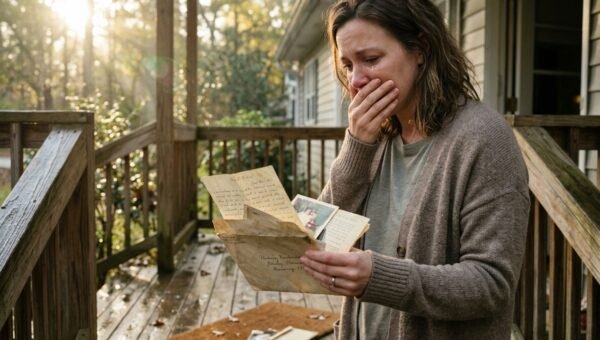
My fingers were hooked around the heavy brass handle of my canvas cleaning bag when Julianna Vance shoved the thick white envelope toward my chest on the front porch. The morning air out in that part of Connecticut always had that sharp, damp bite to it in late October, smelling of rotting maple leaves and salt blown in from the Sound. I had spent fifteen years on my knees in that house, scrubbing grout, polishing silver that nobody used except for Thanksgiving, and listening to the grandfather clock in the front hall tick away the afternoons while Arthur sat by the bay window with his tea.
Fifteen years of my life tied up in their laundry and their polished cherrywood floors. When Arthur finally passed away at eighty-two, his children didn’t wait for the dirt to settle before they brought in the estate liquidators with their clipboards and yellow tags. Julianna stood there in her designer trench coat, her blond hair pulled back into a tight knot that didn’t have a single strand out of place, looking down at me as if I were just another piece of unwanted furniture she needed hauled off to the dump before the open house.
“A little something, for all your years with us,” she said, and went right inside, letting the heavy mahogany door click shut behind her without even waiting for me to say thank you. I stood on the top step for a second, staring at the brass knocker shaped like a lion’s head, feeling the cold seep right through the soles of my sneakers.
I figured it was a card, maybe a check for a couple of hundred dollars rounded up to make them feel charitable before they split the proceeds of a two-million-dollar colonial. It felt heavier than a card, though, heavy and stiff in a way that made me think someone had folded up a bunch of fifty-dollar bills inside a folded piece of stationery. I tucked it down deep into the front pocket of my coat, adjusted the straps of my bag, and started the long walk down the gravel driveway toward the commuter station. The 9:14 train to Bridgeport was always half-empty on Tuesdays, which suited me fine because it gave me a chance to sit by the window and catch my breath before I went home to an empty apartment and a pot of instant coffee.
The train car smelled like stale floor wax and wet wool as it rattled over the tracks, swaying side to side with that familiar rhythmic thump that I had listened to for half my life.
I pulled the envelope out of my pocket and turned it over in my hands, noticing the thick parchment paper right away. It wasn’t the kind of stationery Julianna bought in bulk from the office supply store down on Elm Street; it was heavy, cream-colored linen with deckled edges that looked like it had been sitting in the bottom of a leather desk drawer for years. My thumb caught the flap, which wasn’t licked shut but sealed with a small dab of red wax stamped with a crest I had never seen before, a simple anchor entwined with an oak leaf. I broke the wax with my thumbnail, the dry snap sounding louder than it should have in the rattling car, and slid out the contents. There was a folded note written in Arthur’s familiar, shaky hand, the letters leaning hard to the right because of the tremors he had started getting in his seventies, and behind it, tucked into a pocket of thick cardstock, were two things that made my heart give a strange, heavy thud against my ribs.
Behind a short note in the old man’s own handwriting, he’d written it himself before he got sick, were a pair of heavy brass keys on a faded leather fob and a folded legal deed with the official gold-foil seal of the New Haven County Clerk’s office. I didn’t breathe for a second. The train screeched as it rounded a curve near the harbor, the salt air blowing in through a leaky window frame, and I unfolded Arthur’s note with fingers that suddenly felt clumsy and cold. My Evelyn, the note began, written in that familiar spidery ink that looked like it had taken him an hour just to get through the first sentence. If you are reading this, Julianna and Marcus have finally succeeded in turning my home into a cash machine, and you are standing on the porch wondering why you wasted fifteen years listening to their complaints.
I am sorry I could not protect the big house for you, but I took care of something better. The keys belong to the small cottage out on Harbor Road in Old Saybrook. The deed was transferred into your name through Paul Harmon two years ago, before my hands stopped working and before my children started counting my pulse. You kept me company when nobody else in this family could be bothered to look me in the eye. Consider it back pay for the tea we drank while the world went by.
I read those three sentences three times over, my eyes blurring slightly as the gray waters of the Bridgeport harbor flashed past the train window. I didn’t know what to do with my hands. I held the heavy brass keys up in the dim light of the railcar, feeling the cool, solid weight of them, and then I looked back down at the deed. It wasn’t a copy. It was the original transfer document, dated eighteen months prior, bearing Arthur’s clear, uncompromising signature and the notarized stamp of Paul Harmon, an attorney whose office I had cleaned around once when I first started working for the firm back when my knees didn’t ache in the damp. Arthur Vance had owned a lot of property in his younger days before he retired from the engineering firm, but everyone in town knew he sold off his holdings after his wife passed away, or so the kids always claimed whenever they came around arguing about inheritance taxes and nursing home costs.
They thought he was losing his mind toward the end, especially after he had that minor stroke that made him forget where he put his reading glasses, but sitting there on the rattling train, I realized Arthur’s mind had been sharper than a tack while his children were too busy planning their inheritances to notice what he was doing right under their noses.
The next two days passed in a blur of quiet panic and telephone calls to offices where people used words like probate and conveyance that made my head spin. I didn’t go back to the Vance house, even though Julianna left two sharp voicemails on my cell phone asking why I hadn’t returned the vacuum attachments she left out in the mudroom. I called Paul Harmon’s office from my kitchen table, my hand shaking so hard I dropped the receiver twice before the receptionist finally put me through to the old lawyer himself. Mr. Harmon didn’t sound surprised when I told him who I was; he just let out a long, dry sigh that sounded like dry leaves scraping across concrete and told me to be in his New Haven office by two o’clock on Thursday afternoon. When I walked into his carpeted office, smelling of old paper and peppermint lozenges, he was sitting behind a massive oak desk with a thick manila folder opened right in front of him. He didn’t smile, but he didn’t look at me like I was a hired hand either, which was a nice change from the way Julianna always treated anyone who didn’t belong to a country club.
“Arthur knew exactly what he was doing, Mrs. Gable,” Mr. Harmon said, adjusting his tortoiseshell glasses and tapping a finger against a corner of the trust agreement. “His children have been trying to get their hands on that coastal parcel for five years because developers offered them half a million just to level the old structure and put up a three-story condominium. Arthur hated developers more than he hated his own golf game. When they started talking about putting him into an assisted living facility down in Fairfield three years ago, he came in here with a cashier’s check for the property taxes, four years of prepaid maintenance, and a signed deed that bypasses the estate entirely. The house is yours, lock, stock, and barrel. There’s nothing Julianna or Marcus can do to claw it back because it was settled while Arthur was still of sound mind and medically cleared by his physician.” He slid a second paper across the desk toward me, a bank statement showing a modest operating account attached to the trust for roof repairs and insurance. “He left you twenty thousand dollars for the heating oil, too. He said you’d need it because the wind off the Sound comes right through the floorboards if you don’t keep the woodstove burning.”
I sat there in that leather chair, looking at the numbers on the page, and for the first time in fifteen years, I didn’t feel like I had to apologize for being in the room. I thought about all those afternoons when Julianna would come home from her yoga class or her committee meetings and complain about the dust on the mantelpiece while Arthur sat quietly in the corner, staring out at the garden with his hands folded over his cane. Julianna never once asked him how his day was going, and Marcus only showed up when he needed to borrow thirty thousand dollars for some failing import business in Stamford. They treated their father like an old car they were just waiting to trade in for a newer model, and when he didn’t want to go along with their plans, they acted like he was a burden they had to endure out of Christian charity.
Arthur had told me once, while I was scrubbing the coffee rings off his walnut desk, that blood was just a legal term people used to excuse bad manners. I didn’t know back then that he was talking about his own flesh and blood, but sitting in Paul Harmon’s office, listening to the legal machinery hum in my favor, his words made a kind of cold, clear sense that stayed with me all the way back down the elevator.
The real trouble started on Friday evening, just as I was packing two cardboard boxes of kitchenware into the trunk of my old Honda Civic. My phone rang with a sharp, aggressive trill that made me jump, the caller ID flashing Julianna’s name in bright capital letters. I let it ring three times before I swiped the screen, pressing the phone to my ear while the wind off the street whipped my hair across my face. She didn’t bother to say hello or ask how I was doing; her voice came through the speaker thin and sharp like a broken jar, vibrating with that high-end panic that rich people get when they realize someone has taken a nickel out of their pocket. “Ebenezer, Evelyn,” she corrected herself, though the slip told me exactly what she really called me behind my back. “What is this nonsense Paul Harmon’s office is talking about? Marcus went down to the town hall this morning to pull the deed for the Old Saybrook property so we could list it with the broker, and the clerk told him the parcel was transferred out of the estate two years ago.”
I leaned back against the fender of my car, feeling the cold metal through my jacket, and looked across the asphalt parking lot toward the grocery store where I used to buy Arthur’s favorite ginger biscuits because the bakery in town stopped carrying them. “It’s not nonsense, Julianna,” I said, my voice sounding a lot steadier than my knees felt. “Your father gave me the deed before he got sick. I have the keys right here in my pocket.” There was a long, heavy silence on the other end of the line, the kind of silence where you could almost hear her brain trying to calculate how many lawyers it would take to undo something her father had done while she wasn’t paying attention. “You’re a cleaning woman,” she finally spat out, the venom dripping off every single syllable so clearly I could picture her standing in her spotless kitchen with her hand pressed against her forehead. “You took advantage of an old man who didn’t know what day of the week it was. That property is worth four hundred thousand dollars. My father wasn’t in his right mind, and you know it. We can have that document thrown out by Monday morning before you even step foot in the driveway.”
“You can try,” I said softly, remembering the way Arthur used to look when she slammed his front door on her way out to her committee meetings. “Mr. Harmon has the video recording from the day your father signed the papers in his office. He had his doctor right there in the room with him, and Arthur explained every word of it on tape. He said he wanted someone to have that house who actually knew how to watch the tide come in without complaining about the damp.” I didn’t wait for her to scream back at me. I just hit the red button on the screen, dropped the phone into the cupholder, and listened to the electronic beep as the line went dead. My hands were shaking a little bit, but it wasn’t the kind of shaking I used to get when I dropped one of Julianna’s Waterford crystal wine glasses; it was the kind of shaking that comes from standing up straight after carrying a heavy load uphill for too many miles. I got into the car, turned the key, and watched the engine light flicker twice before the old four-cylinder motor settled into its familiar, rattling hum.
The drive down to Old Saybrook took about forty minutes once I got off the interstate and onto the narrow two-lane roads that wound past the salt marshes and the old shipbuilding yards where the grass turned that pale, ghostly silver in the autumn twilight. The cottage wasn’t much to look at from the outside, just a small, weathered saltbox with cedar shingles that had turned a dark, iron-gray from fifty years of winter storms off the Sound. A narrow shell driveway led up to a detached garage with a sagging roof, and a low stone wall separated the overgrown lawn from the tidal flats where the egrets liked to stand in the shallow water when the tide was going out. There were no manicured boxwood hedges here, no security cameras mounted under the eaves, and no white-painted columns trying to look like something they weren’t. It smelled of rotting kelp, cedar smoke from a neighbor’s chimney, and cold salt water, the kind of smell that gets into your clothes and stays there until you feel like you belong to the place.
I cut the engine, sat in the dark for a minute with the headlights shining against the peeling white paint of the front screen door, and pulled the heavy brass keys out of my pocket. The iron ring was cold against my palm, but the keys themselves had been rubbed smooth on one side where Arthur must have carried them in his pocket for years before he handed them over to Harmon. I walked up the three wooden steps, the wood groaning slightly under my boots, and fitted the larger key into the old mortise lock. It didn’t turn right away; I had to jiggle it twice and lean my shoulder against the edge of the door the way Arthur had probably done a thousand times when the salt air made the wood swell during the spring storms. With a dry, heavy click, the bolt slid back, and I pushed the door open into a narrow hallway that smelled faintly of old lemon oil and wood smoke.
Inside, the living room was small and square, dominated by a fieldstone fireplace where a half-burned birch log still sat on the iron grate just waiting for a match. A row of low bookshelves ran along the south wall, filled with paperbacks about maritime history, old navigation charts of Long Island Sound, and thick volumes of poetry that looked like they had been read until the bindings cracked. There was no television, no white leather sofa, and no modern glass coffee table with art books stacked up to impress the neighbors. Just a worn plaid armchair by the window, a floor lamp with a green glass shade, and a small oak table where Arthur must have sat with his binoculars to watch the fishing boats go out toward the lightship at dawn. I set my canvas cleaning bag down on the floor by the hearth, the sound of it landing dead and heavy against the wide-plank pine boards that had been scuffed by fifty years of other people’s footsteps.
The kitchen was no bigger than a ship’s galley, with a white porcelain sink under a double-hung window that looked straight out over the marsh grass toward the water where the moon was starting to lift its pale edge above the dark line of the distant shore. I walked over to the counter, my fingers tracing the edge of the laminate where a small chip showed the brown backing underneath, and reached into my pocket for the keys. I didn’t put them back in my bag or hang them on a hook by the back door like I used to do with the keys to the Vance mansion. Instead, I picked up a simple blue ceramic saucer that was sitting on the windowsill, left there by whoever had cleaned up the place after Arthur last stayed here, and laid the heavy brass ring right in the middle of it. The metal clinked against the glaze with a clean, sharp sound that seemed to fill the whole quiet house, echoing off the low ceiling and out through the open transom window above the sink.
Outside, the tide was turning, the water beginning to whisper against the muddy banks of the creek with that low, sucking sound that means the ocean is taking everything back out to where it belongs. I stood there by the window for a long time, watching the white foam line trace the edges of the marsh grass while the kitchen grew dark around me, until I couldn’t see the line between the water and the sky anymore. My phone stayed silent in the car, and down in Connecticut, Julianna and Marcus were probably still calling real estate agents and lawyers who couldn’t change a single word of what Arthur had written down on that heavy cream paper. I didn’t care about the big house anymore, or the silver spoons, or the way Julianna looked at people who didn’t carry checkbooks with embossed names. I reached out, turned on the small brass-plated lamp on the counter, and watched the yellow light spill across the chipped porcelain and the salt-stained glass. For the first time in fifteen years, the water was right outside my window, the house didn’t belong to anyone who could tell me to wipe the counters twice, and the key was sitting right where I could see it every single morning when the sun came up over the Sound.